65 m². This is the area that most often comes up when describing a T3 in France. However, depending on whether you enter a pre-war building or a brand new residence, the difference can be as much as 15 m². Transforming a T2 into a T3 is not a whim; it is an exercise in precision, constrained by rules that require consideration of light, circulation, and standards, a balancing act where every adjustment matters.
Why transforming a T2 into a T3 can change your daily life
Moving from a T2 to a T3 goes beyond the quest for square meters. It offers flexibility to a living space, anticipates family changes, allows for the installation of a home office, or accommodates the growing volume of everyday items. Optimizing means rethinking every nook, adding value to the space, while avoiding sacrificing conviviality or natural light.
The decision to add an extra room marks a real turning point: the apartment ceases to be just a shelter. It adapts, inventing a thousand uses. The living area multiplies the ease of living. Each person has their need: remote work in a quiet corner, a compact guest room, a mini-workshop for DIY, nothing is left to chance. The main challenge is to combine multiple functions and the enjoyment of volumes, without ever losing the feeling of space.
In the real estate market, the benefit is tangible: an extra bedroom, and everything changes. Families are looking for this T3, rentals accelerate, and the property increases in value. To better understand the standard to aim for, just consult the average area of a T3: this reference figure sheds light on decisions, guides the project, and helps stay within the target of current expectations.
Mastering each surface, adjusting ergonomics, and providing relevant use for each area is what makes the difference for a sustainable layout. The result: a home that transforms without ever losing quality of life.
Which spaces to rethink to gain functionality and comfort
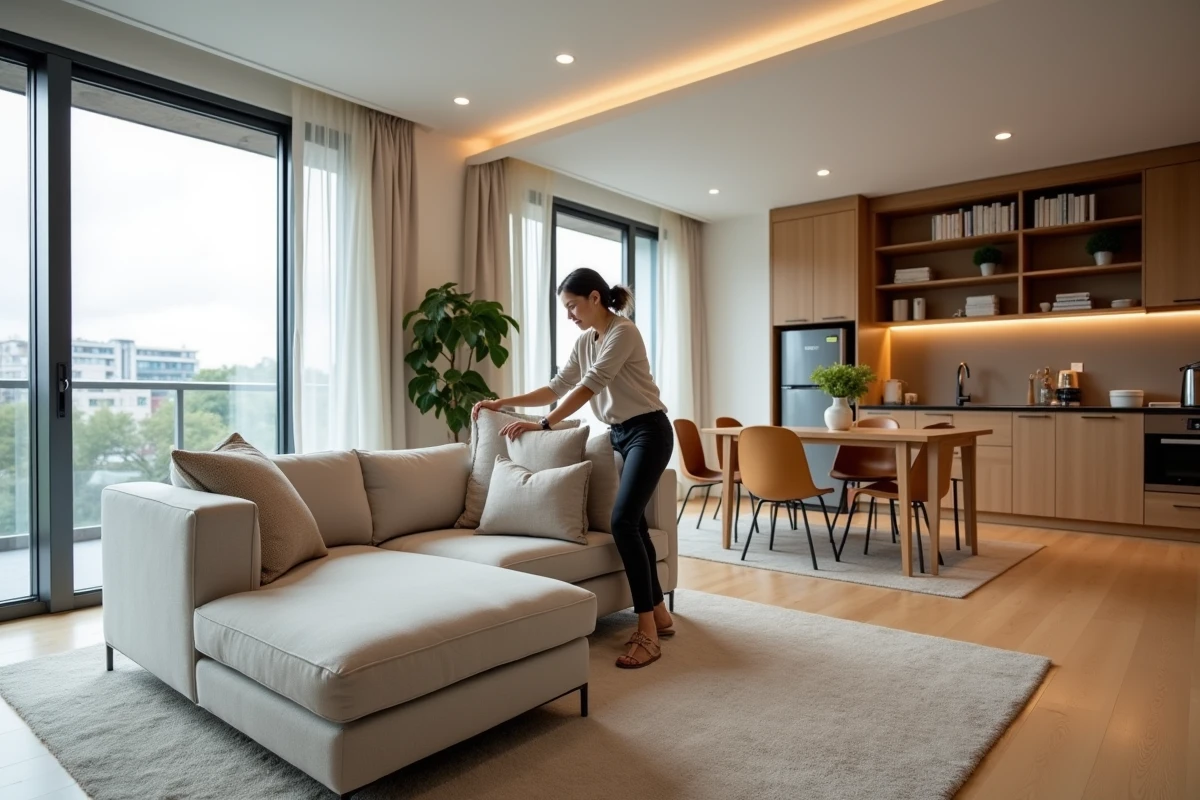
Rearranging a T3 requires leaving nothing to chance. Every detail matters, every surface is scrutinized. The living room concentrates many requirements: today, living rooms and kitchens tend to merge into open and bright spaces, where one can move freely. Creating a true kitchen-living room that brings people together does not prevent subtly delineating uses with a glass partition or a well-placed island.
In the bedroom, habits are challenged: storage is concealed, modular furniture is favored, and colors that enlarge the room are prioritized. A play of movable partitions sometimes allows for dividing the space to create a sleeping area or, conversely, opening the room for an office when the need arises.
The bathroom also requires a fresh perspective. Even modest, it can be welcoming with a walk-in shower, wall-mounted furniture, the choice of large mirrors, and finely tuned lighting. Comfort and optimized space can coexist.
Here are some concretely effective levers to gain functionality and improve comfort day after day:
- Maximize open spaces to create volume and facilitate circulation.
- Adopt a multifunctional approach in each room, to modulate roles according to needs.
- Consider the internal flow, eliminate dead zones, and maintain the feeling of open space.
Whether engaging an interior designer or drawing inspiration from proven solutions, every adaptation, even minimal, generates a real gain in space for long-term well-being.

Estimating your budget and choosing the right tools for a smooth renovation
Starting an apartment renovation without losing control over expenses requires rigor and method. The most costly elements are quickly identified: major works, material choices, and payment for specialized craftsmen. Necessary adaptations due to the state of the building or regulatory constraints, which can be cumbersome to integrate, are added. Changes to walls, floors, or ceilings often inflate the bill, while updating the electrical or plumbing systems remains more accessible.
Being well-equipped makes a difference during a renovation. Between budgeting software and architect follow-ups, it will be essential to schedule each item, anticipate bumps, and avoid dead ends. Relying on a reliable online simulator, obtaining detailed quotes: these steps provide a structured vision, allowing progress without unpleasant surprises.
Establishing a summary dashboard, shared among all project stakeholders, offers a direct view of costs incurred, floor by floor, from the amount allocated to the bathroom to the finishes.
Before any decision, a few precautions are necessary:
- Carefully analyze the cost of materials, as well as the budget for electricity and plumbing.
- Include a margin to accommodate regulatory or technical adjustments, which are sometimes unavoidable.
- Maintain a balance between the available budget, the truly usable area, and the quality aimed for each piece of equipment.
If a renovation project succeeds, it is primarily due to clear and structured management: planning, decision-making, coordination. Whether the goal is to settle permanently in a welcoming T3 or to focus on a rental investment, initial hesitations give way to an apartment that evolves with needs… and never goes out of style.