
You receive a package with an Asos label, unfold the garment, and something feels off: the fit is wrong, the fabric itches, the logo seems misaligned. This scenario has been increasing since clone sites and dubious resellers have been exploiting Asos’s reputation to sell items that have never passed through the brand’s warehouses. Knowing how to spot a counterfeit Asos relies less on the eye of an expert than on a few concrete reflexes accessible to everyone.
Asos order traceability: the first anti-counterfeit filter
Even before touching the product, you can eliminate a large portion of fakes thanks to an element that counterfeit guides almost systematically overlook: the traceability proof linked to the Asos account. An item genuinely purchased on Asos generates an invoice in the order history of the account, a confirmation email with a tracking number, and shipping via the brand’s partner carriers.
When buying second-hand, on a marketplace or through a classified ad, the seller should at least be able to provide a screenshot of their Asos order history or the original invoice. A supposedly new garment sold without any of these elements deserves real suspicion. This traceability criterion is more reliable than a quick visual inspection because it is very difficult to falsify for a counterfeit reseller.
To differentiate between a genuine and fake Asos, you start by tracing the purchase chain before inspecting the product itself.
Fake Asos sites: spotting clones before paying
Asos counterfeits do not only circulate on resale platforms. They also come from sites that mimic the Asos interface, copy its logo, and offer abnormally low prices. These ephemeral shops regularly change their domain names, making them difficult to report.

A legitimate site displays complete legal notices: company name, postal address, customer contact, detailed return policy, and references to intellectual property. An Asos clone generally omits several of these obligations. The terms and conditions are often copied and pasted from another site, with visible inconsistencies (different brand name in the text, absence of mention of the right of withdrawal in accordance with European law).
Here are the warning signs to check on a site claiming to be Asos:
- The URL does not match the official domain asos.com, even if the visual design seems identical. Variants with hyphens, unusual extensions, or suspicious subdomains are common.
- No clear contact page is available, or the only way to reach customer service is a generic form without an email address or phone number.
- The right of withdrawal is not mentioned, or the return conditions remain vague, without a specific timeframe or procedure.
- Prices show massive discounts across the entire catalog, including on new items that are not on promotion on the official site.
Labels and finishes: what to check on the Asos garment
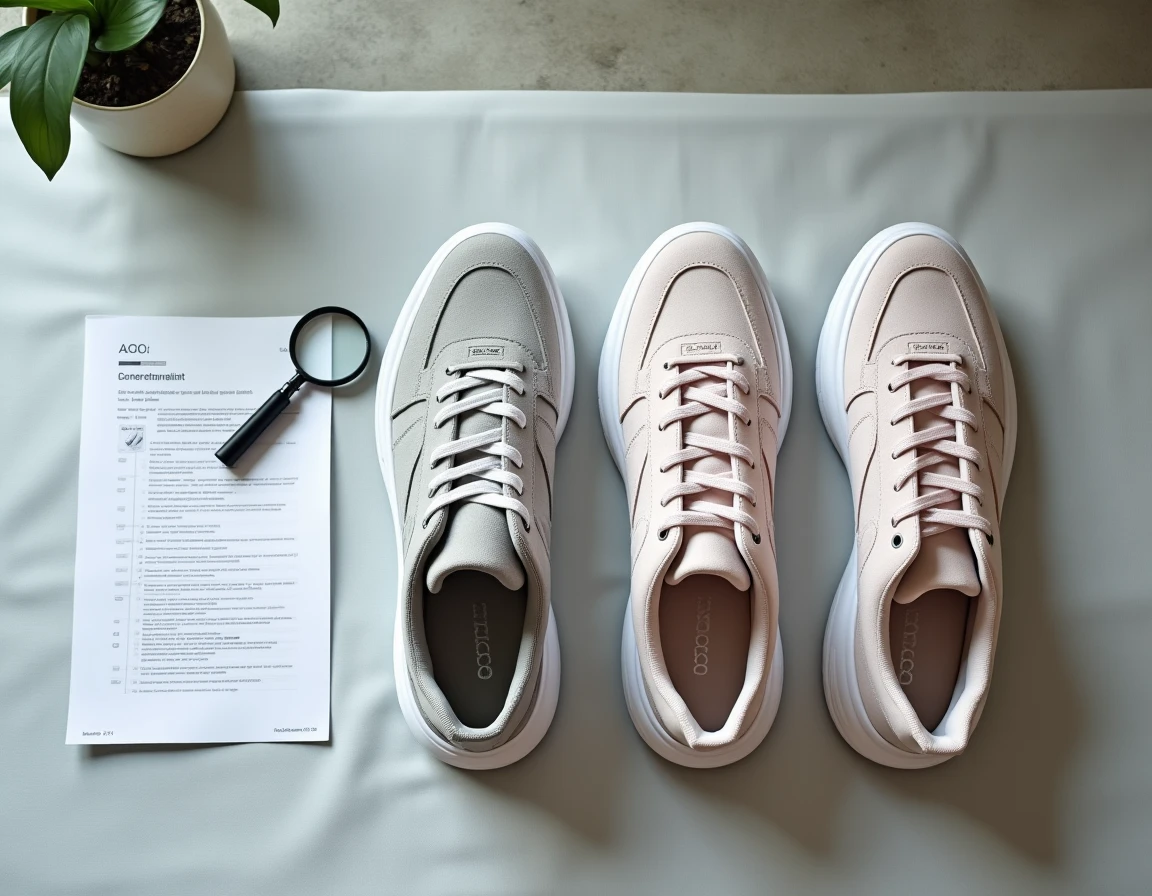
Once you have the product in hand, physical inspection completes the prior verification work. Asos labels contain information on composition, size, and care that complies with European textile regulations. On a counterfeit, these labels often have spelling mistakes, slightly different fonts from those used by the brand, or inconsistent composition information.
The quality of stitching is a concrete indicator. On an authentic Asos item, the seams are even and the threads are properly cut. Threads sticking out, uneven seams, or fabric that puckers at the joints signal a manufacturing quality that does not meet the brand’s standards.
Returns vary on this point depending on the ranges: Asos produces clothing at accessible prices, so the finish is not that of a couture house. We are not looking for perfection, but consistency with what is usually found on the official site for a similar product.
Asos counterfeits on marketplaces: the reflexes to adopt
Peer-to-peer resale platforms represent the most conducive ground for the circulation of fake Asos products. Counterfeit sellers operate with recent accounts, few reviews, and often offer multiple sizes of the same model, which betrays a stock of copies rather than a personal wardrobe.
On these platforms, we apply a simple checklist before confirming a purchase:
- Always ask for the Asos invoice or a screenshot of the order history. A refusal or vague excuse is enough to walk away.
- Compare the photos in the listing with those of the product on the Asos site. Counterfeits often use official visuals rather than real photos of the item.
- Check the age of the seller’s account and the diversity of their sales. A recently created account that only sells “new with tags” items from a single brand is a strong signal.
Major platforms are gradually strengthening their detection systems, with community reporting and account closures in cases of repeated suspicion. Counterfeit sellers then migrate to less monitored channels: small online shops, social networks, private groups.
The best protection remains to cross-check the verifications: order traceability, price consistency, label condition, and seller behavior. One of these criteria alone is not sufficient, but their combination eliminates the vast majority of fakes. When doubt persists after these checks, buying directly from asos.com remains the safest choice.