
The Clio 4 remains one of the best-selling vehicles in the French automotive market. Its engine, whether petrol or diesel, can withstand hundreds of thousands of kilometers when properly maintained. When it isn’t, the bill can rise very quickly. Understanding the mechanisms that lead to engine failure in this Renault model allows for action before a warning light turns a routine trip into a towing situation.
Timing Belt on Clio 4: the Component that Decides Everything
On most engine variants of the Clio 4, the timing belt synchronizes the movements between the crankshaft and the camshaft. If it fails, the pistons can collide with the valves. The engine is then often irreparable, or at least the cost of replacement exceeds the residual value of the vehicle.
The problem is that the timing belt does not give any warning before it breaks. No warning light illuminates to signal its wear. The only solution is preventive replacement according to the manufacturer’s recommendations, expressed in mileage or time, whichever comes first.
Many owners adhere to the mileage but forget the time limit. A Clio 4 that drives little, parked outdoors, exposes its belt to temperature variations and humidity. The rubber cracks and loses its elasticity.
A vehicle that has only covered half of the prescribed mileage can very well break its timing belt if the belt has exceeded its age limit. Anticipating the risk of engine failure on Clio 4 starts with this check, often overlooked during quick inspections at auto centers.
When replacing the belt, the complete kit (tensioners, water pump) should be changed at the same time. Replacing just the belt while keeping a worn tensioner only postpones the problem by a few months.
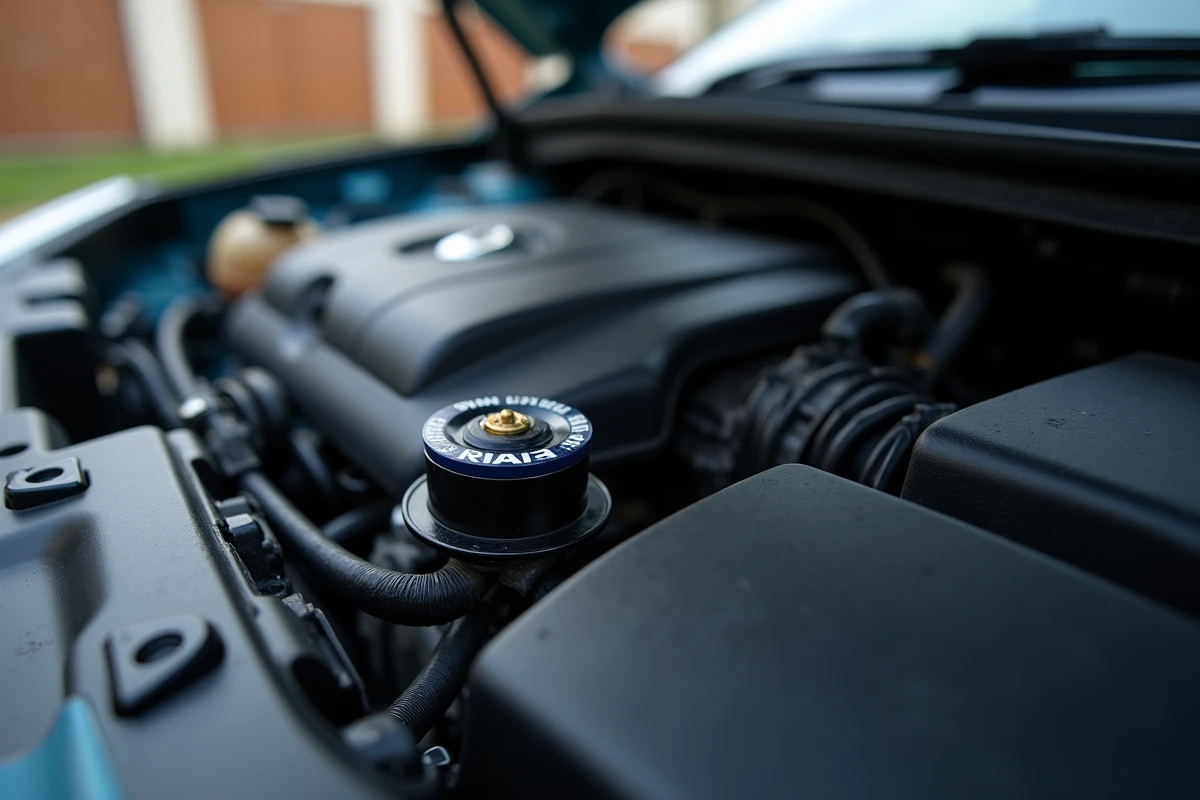
Oil Circuit and Turbo: Two Interconnected Systems on Recent Renault Engines
The turbo engines of the Clio 4 (both petrol and diesel) are closely dependent on the quality and level of engine oil. The turbocharger operates at very high speeds. Without proper lubrication, its bearings wear out, metal particles contaminate the circuit, and the entire engine suffers the consequences.
A low oil level accelerates the wear of both the turbo and the engine simultaneously. Checking the level between oil changes, especially on a diesel that starts to consume oil, is not trivial. It’s a habit that takes thirty seconds and can save several thousand euros in repairs.
The Quality of Oil Matters as Much as the Quantity
Using oil whose viscosity does not meet Renault specifications causes poor cold lubrication and premature degradation of the rings. Field reports vary on the ideal oil change frequency beyond the manufacturer’s recommendations, but one point is agreed upon: degraded oil loses its properties long before the next scheduled oil change arrives, especially in urban use with many short trips.
- Check the oil level at least once a month, with the engine cold and the vehicle on level ground
- Adhere to the oil standard recommended by Renault for the relevant engine, without trying to save on quality
- Monitor any bluish smoke from the exhaust, a sign of abnormal oil consumption
- Have the turbo checked as soon as an unusual whistling or loss of power occurs
Warning Lights and Diagnostics: What the Dashboard Really Says
The illumination of a check engine light on the Clio 4 does not automatically mean imminent failure. The onboard diagnostic system (OBD) records fault codes that cover a wide spectrum: worn lambda sensor, clogged EGR valve, minor ignition problem. Most of these faults, if caught early, can be resolved at a moderate cost.
The danger comes from the habit some drivers have of ignoring a constantly illuminated warning light. A steady check engine light can sometimes mask a new, more serious fault that adds on without being noticed. The first fault code “drowns” the subsequent ones if no one reads the memory of the ECU.
Regularly Use the Diagnostic Tool
Connecting a diagnostic tool, even a basic one, after each warning light activation allows for sorting urgent issues from minor ones. Independent garages and some equipment suppliers offer this reading for a low fee. On a several-year-old turbo diesel vehicle, this habit identifies injection system deviations or boost pressure problems before they cause mechanical damage.
The available data does not allow for precise quantification of the engine longevity gain related to regular diagnostics. However, the mechanical logic is clear: an early corrected fault does not escalate into failure.

Preventive Maintenance for Clio 4: Key Areas Not to Delay
Beyond the timing belt and oil change, several maintenance operations directly protect the engine from major failure.
- Coolant keeps the engine block temperature within a safe operating range. A leaking circuit or a fluid that has never been renewed promotes overheating, leading to a warped cylinder head
- A clogged air filter reduces intake, alters the air-fuel mixture, and puts more strain on the injection system
- Replacing spark plugs (petrol engines) or checking injectors (diesel) ensures clean combustion that limits abnormal thermal stress on internal parts
Delaying maintenance by a few thousand kilometers may seem trivial, but the effects accumulate. A saturated air filter combined with oil at the end of its life and coolant below the level creates ideal conditions for local overheating in the block.
On Clio 4 diesels equipped with a particulate filter, incomplete regenerations (too short trips, engine shutdown during the cycle) dilute the engine oil with fuel. The oil level rises on the dipstick, which seems reassuring, but diluted oil loses a significant part of its lubricating ability.
Keeping a Clio 4 reliable over time does not require advanced mechanical skills. It requires consistency, an up-to-date maintenance log, and the willingness to address each alert as it arises rather than betting on a consequence-free postponement.