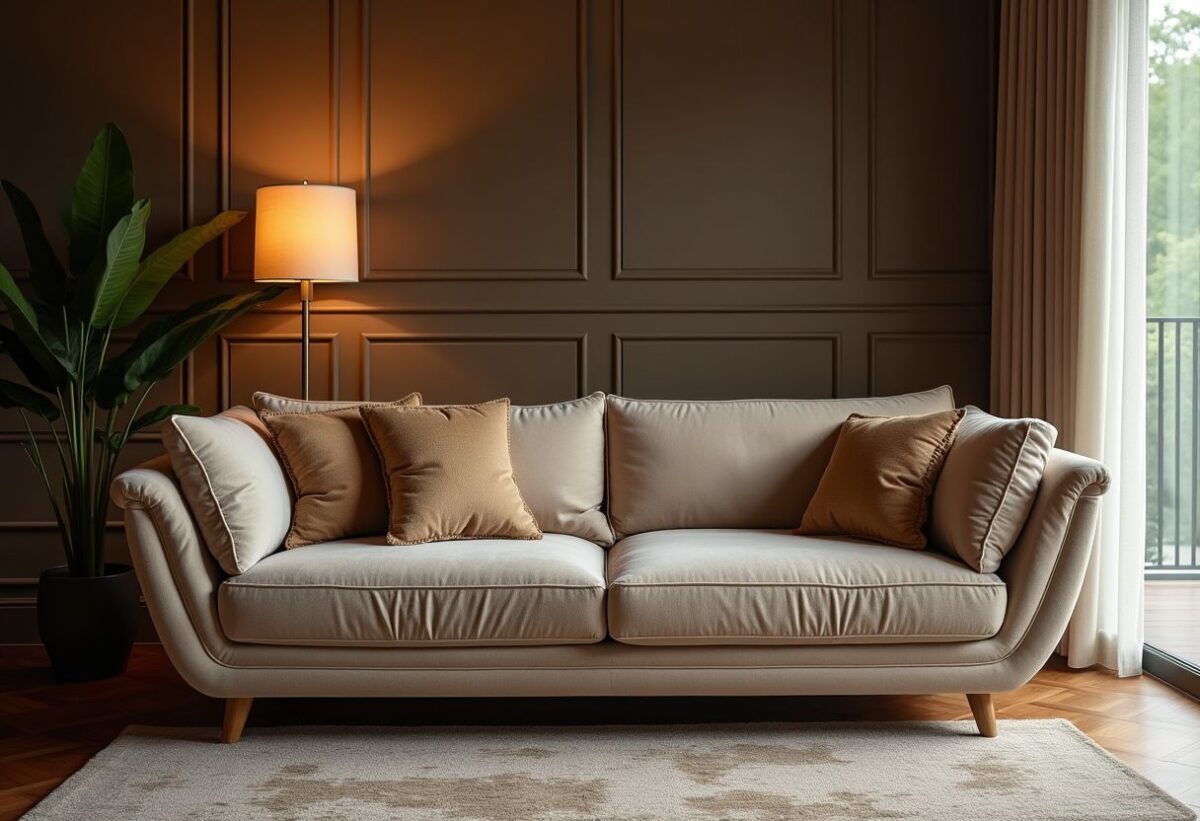
The sofa, often considered the heart of the home, is much more than just a piece of furniture. It embodies the subtle marriage of comfort and aesthetics, providing a space for relaxation and conviviality. Whether placed in a modern living room, a guest bedroom, or a cozy reading nook, the sofa knows how to become indispensable and captivate attention with its appearance and function.
The origins of the sofa
The sofa has a rich and varied history that reflects the cultural and social evolutions of society.
Originally, the sofa appeared in Antiquity, mainly in the homes of the elite. Used as a status symbol, it was often richly adorned and made from precious materials. Over the centuries, its design evolved, passing through Gothic, Baroque, and Rococo styles.
Each era left its mark, influencing not only the shape but also the choice of fabrics and colors. The 19th century saw the rise of the sofa in bourgeois households, a sign of the emergence of a middle class eager for comfort and elegance.
Today, the modern sofa is a testament to this long tradition, often combining classic elements with contemporary innovations.
Dominant materials and styles
Deciding on the material and style of a sofa is an essential consideration for anyone looking to marry functionality and aesthetics in their interior.
- Leather: Synonymous with luxury and durability, a leather sofa adds a sophisticated touch to any space. It often ages well, developing a patina over time for an even more inviting look.
- Fabric: Offering an infinite variety of textures and colors, fabric sofas allow for almost limitless customization to fit any interior decor.
- Velvet: Valued for its soft touch and luxurious appearance, velvet is perfect for those looking to add a tactile and visual dimension to their living space.
- Wood and metal: Often used in visible structures, these materials bring robustness and a contemporary or rustic touch depending on their finish.
The importance of comfort and ergonomics
The comfort of a sofa resides not only in its appearance but also in its ability to offer optimal support and unparalleled relaxation.
When choosing a sofa, the first consideration is often its comfort. The cushions should provide sufficient support, neither too firm nor too soft, to contour to the body’s shape without causing tension. Ergonomics are equally crucial, with backs that support the back well and armrests at the right height for resting arms. A sofa should invite relaxation, whether for a quick nap, a moment of reading, or a movie night.
Modular models, with features like adjustable reclining or retractable footrests, perfectly meet this requirement.
The sofa as the centerpiece of decor
A sofa is not just functional; it is a central element that defines the style and ambiance of a room.
It plays a crucial role in layout and decoration. Its color, shape, and texture can transform a space, creating an atmosphere that ranges from cozy and welcoming to elegant and modern. For those looking to make a bold statement, bright colors or dynamic patterns can serve as a focal point in a room.
Neutral tones, on the other hand, provide a calming and versatile backdrop, easily harmonizing with other decorative elements.
When it comes to arranging a guest room with a convertible sofa, the choice often leans towards designs that do not sacrifice elegance for practicality.