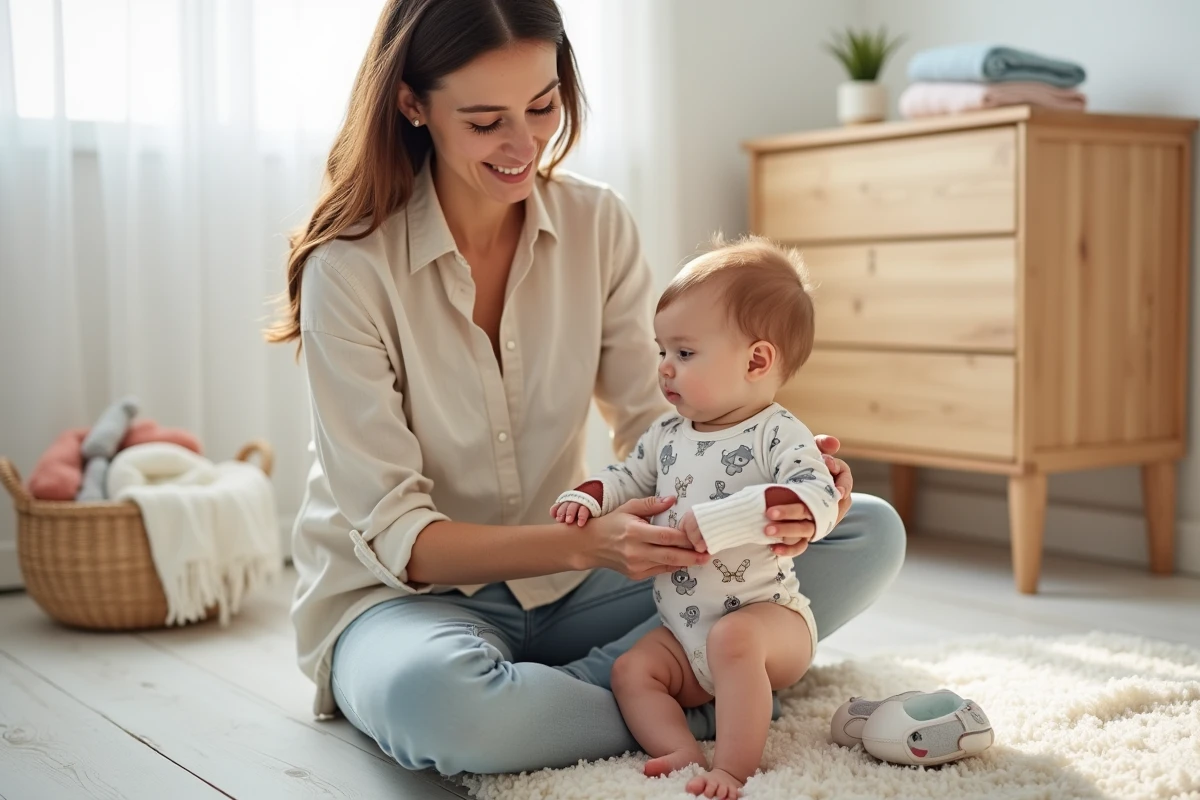
The choice of baby clothes is not just about soft materials and the right size. As soon as one seeks to move beyond basic uniform items, the difficulty shifts to the very design of the garment: opening systems, seam placement, compatibility with diaper changing and daily dressing movements.
It is on these construction details that the difference lies between an original garment that ends up at the bottom of the drawer and an original garment that is worn every day.
Seams, snaps, and dressing: the technical construction of comfortable baby clothing
A bodysuit or a romper is first judged by its opening and closing system. Snaps at the crotch remain the standard, but their positioning makes all the difference: side snaps make changing easier without fully lifting the baby. Crossed closures at the front, inspired by the kimono, allow dressing a newborn without pulling the garment over their head, which reduces crying and stress.
We observe that brands that focus on functional originality also rethink the layout of seams. A flatlock seam inside the garment avoids friction on delicate skin. Outside seams, still rare in the French market, completely eliminate this risk.
The cut plays an underestimated role. A garment that is too tight around the thighs hinders the natural pedaling movement of the infant. Conversely, excess room in the torso creates folds that irritate under the car seat harness. The most useful originality is that which solves a concrete usability problem.
Materials and labels for risk-free baby clothing
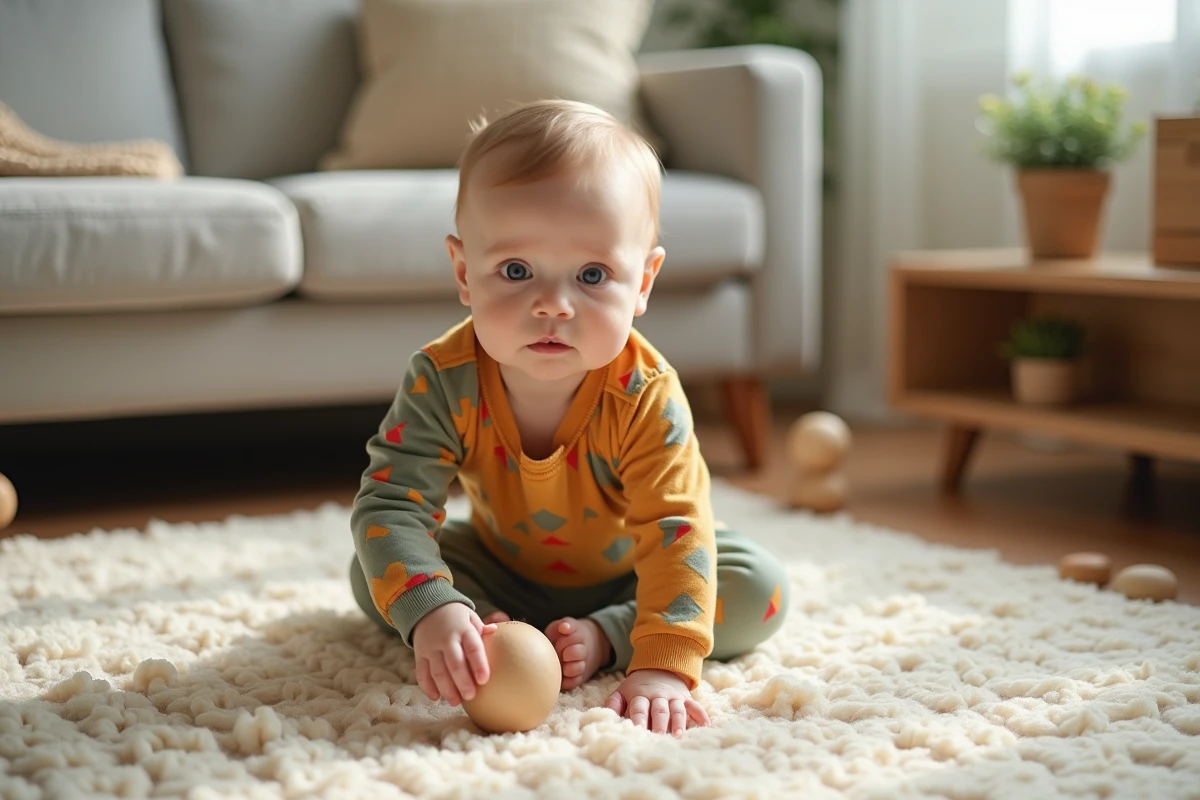
Certified organic cotton (GOTS or Oeko-Tex Standard 100) remains the benchmark. Certification guarantees the absence of harmful chemical residues in direct contact with the skin. We recommend checking for the actual presence of the label on the tag, as the term “natural cotton” has no regulatory value.
Beyond cotton, certain fibers deserve attention. Bamboo jersey offers a softness comparable to combed cotton with superior absorbency, suitable for babies who sweat a lot. Blended linen, more common in original collections, provides structure without stiffness, as long as the weave is soft enough for daily use.
Specialized brands like Bébés Lutins carefully select their materials by balancing comfort with design, allowing for pieces that are both atypical and suitable for the sensitive skin of little ones.
- The fabric weight must be dense enough not to deform in the wash, but light enough not to overheat the baby. A medium-weight jersey is suitable for most indoor seasons.
- Reactive dyes, used by committed brands, fix the color within the fiber instead of depositing it on the surface. Garments retain their brightness longer and do not bleed when in contact with saliva.
- Embroidery and appliqués must be flat and securely attached. Any raised piece that can be pulled off by a baby poses a risk of ingestion, a point covered by the European General Product Safety Regulation.
Regulatory safety of baby clothing: cords, accessories, and traceability
The new European product safety regulation strengthens traceability requirements for items intended for children. This directly concerns clothing: cords, decorative ribbons, novelty buttons, and small removable parts are subject to increased scrutiny.
In practice, an “original” garment that incorporates decorative laces at the neckline presents a safety risk and should be avoided.
Before purchasing, we recommend checking three points:
- No decorative element should be able to detach under moderate pulling. Test by firmly tugging on buttons, knots, and appliqués.
- The label must indicate the country of manufacture, the exact composition, and a way to contact the manufacturer or importer, in accordance with traceability obligations.
- Metal snaps must be nickel-free. Prolonged contact with nickel can cause dermatitis in infants.
The case of made in France baby clothing
The label “made in France” on baby clothing guarantees a clearer quality control framework for parents. French workshops apply European standards without import intermediaries, simplifying traceability. Several French brands now offer collections that combine original design and strict compliance with safety standards.
Mix-and-match: building an original and functional baby wardrobe
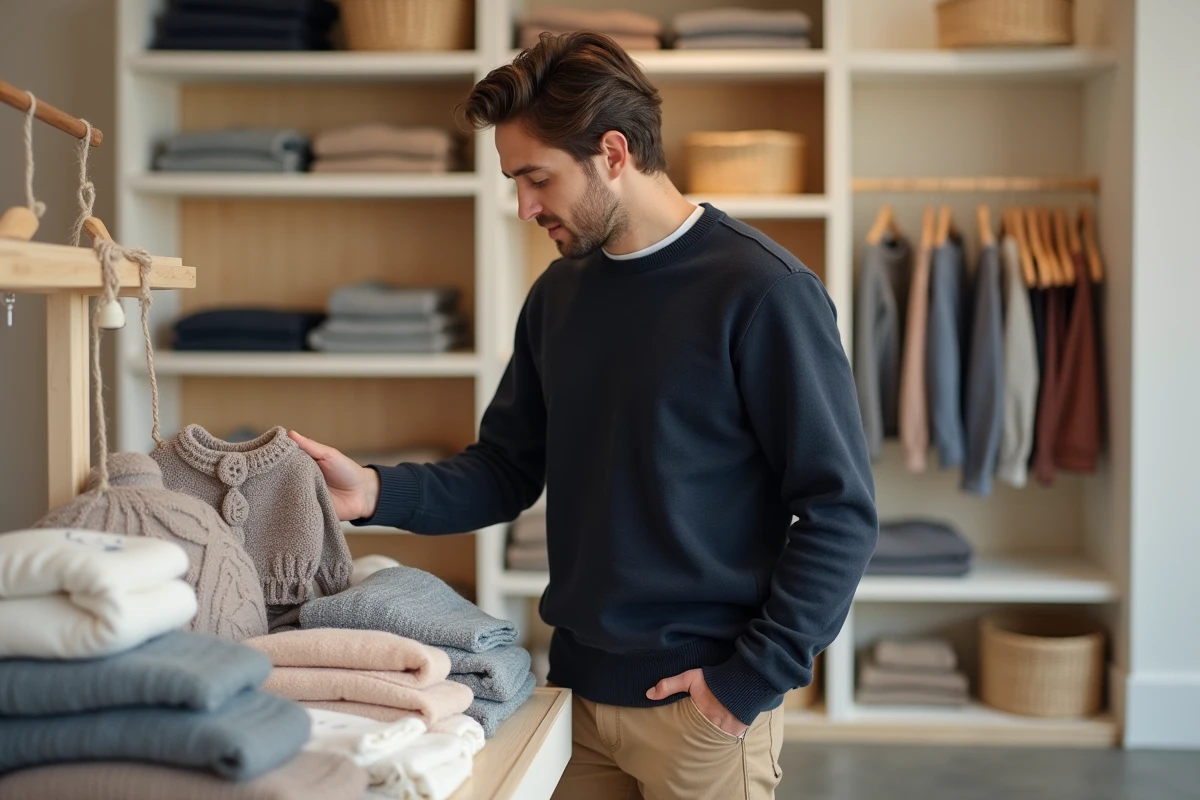
The mix-and-match approach involves creating a limited wardrobe of interchangeable pieces. Instead of accumulating complete outfits, one selects basics (solid bodysuits, soft leggings) and a few standout pieces (printed overalls, colorful cardigans, patterned bloomers).
Three standout pieces are enough to vary outfits over an entire week. The rest of the wardrobe remains neutral and functional. This system limits purchases, reduces the budget, and leaves more room for truly original pieces.
Size deserves one last point of attention. We recommend always buying one size up for “heartthrob” pieces with patterns or special designs. A baby wears a size for only a few weeks. A slightly larger garment remains usable with a bodysuit underneath, while a garment that is too tight becomes unusable overnight.
The choice of original baby clothing benefits from being considered as a technical arbitration: construction quality, regulatory compliance, compatibility with daily movements. A bold print is worthless if the closure system complicates every change. Conversely, a well-thought-out cut with a detail of color or pattern is enough to stand out without sacrificing comfort.